
Long seen as a simple alternative to listed markets, private markets are now one of the major pillars of the global economy. Driven by the abundance of capital, the changing needs of businesses and the rise of technology, they are profoundly reshaping the channels for investment and value creation. Lennart Blecher, Chairman of EQT Real Assets, takes a closer look at the driving forces behind this shift.
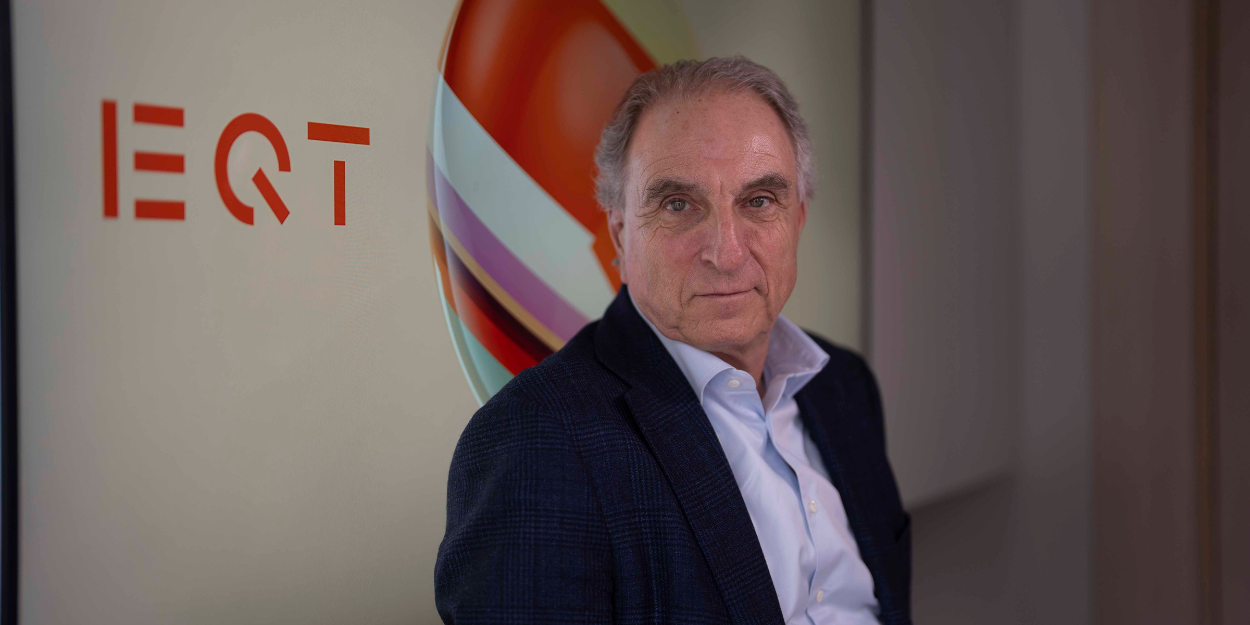
Private markets now seem to be gaining structural ascendancy over listed markets. What are the underlying forces behind this shift?
If we look at the United States, thirty years ago there were around 8,000 listed companies. Today there are just 4,000. Public procurement markets have been contracting structurally for decades. At the same time, the vast majority of companies generating sales in excess of €100 million remain in the private sector. Around 95% in Europe, 90% in North America and almost 85% in Asia-Pacific. Access to capital has changed fundamentally. Companies no longer need to go public to finance their growth. Sources of private capital have multiplied, enabling companies to grow without the costs, reporting constraints and short-term pressures inherent in listed markets.
Another decisive factor is the time horizon. Listed companies operate under constant scrutiny, subject to quarterly publications and market volatility. In the world of private equity, it is possible to take a long-term view. Many managers and directors today prefer to operate in a private environment where they can concentrate on creating lasting value. This structural preference for long-term shareholding is one of the major drivers behind the expansion of private markets.
How would you describe the current dynamics of private markets, particularly in terms of diversification of strategies, liquidity and transparency?
Today's private markets are much broader than just the traditional buyout universe. There has been significant growth in infrastructure, real estate and, above all, private debt. In recent years, private credit and secondary transactions have been among the most dynamic segments. The secondary market, in particular, has grown spectacularly, by around 40% in 2025, precisely because it responds to one of the historical criticisms levelled at private markets: liquidity. The existence of a deep and active secondary market offers investors exit solutions without the need for public listing of assets.
We are also seeing sustained growth in evergreen structures. These open vehicles provide greater flexibility for investors and managers alike. They broaden access to private markets, particularly for private investors. They are helping to bridge the structural gap between traditional closed funds in private markets and listed markets. As for transparency, private equity is often perceived as opaque. In reality, reporting to investors is extremely detailed. At EQT, transparency, governance and sustainability are central pillars of the model. In some respects, particularly in terms of alignment of interests, governance and access to operational information, private markets can be more transparent than listed markets.
In an environment of higher interest rates and more selective growth, what is the short-term outlook for private equity?
The era of cheap debt is clearly over. When interest rates were close to zero, financial engineering played a more important role in creating value for certain companies.
Today, with higher interest rates, it is easier to identify players capable of generating value through their operational performance. This environment favours managers with solid industrial skills and in-depth sector expertise.
At EQT, our industrial heritage and active investor approach are at the heart of our model. We work closely with our portfolio companies to improve their operational efficiency, accelerate their digitalisation, optimise their financial structures and drive their strategic transformation.
Geographic diversification is becoming a key lever. Many of the major US private equity players remain highly concentrated in their domestic markets. Against a backdrop of increased volatility and adjusted valuations, we are seeing renewed interest in Europe and Asia-Pacific, EQT's home regions. The presence of local teams and established networks in 26 countries is a major competitive advantage for identifying opportunities and managing risks on an international scale.
Key facts
EQT was spun off from Investor AB, the investment holding company of the Wallenberg family, a dynasty of industrialists who have held majority stakes in major Swedish groups and supported their international expansion for several generations. These include ABB, AstraZeneca, Atlas Copco, Electrolux, Ericsson and Saab.
The EQT Group, founded in Stockholm in 1994, now has offices in 26 countries. The group has around 270 billion euros in assets under management, divided between Europe (50%), North America (35%) and Asia-Pacific (15%). EQT will be floated on the Stockholm stock exchange in 2019, and is structured around private equity, infrastructure and real estate. The EQT portfolio currently comprises around 330 companies.
EQT's Infrastructure platform accounts for almost 30% of the group's assets under management. It comprises more than 50 companies and assets, with a significant footprint: more than 500,000 kilometres of fibre in Europe and the United States, 330 million passengers transported every year, around 9 GW of renewable projects and more than 80 data centres worldwide.

Looking further ahead, how do you see the private equity landscape evolving over the next decade?
Size will become an increasingly important factor. There are around 15,000 private equity firms in the world, but the small number of large platforms are capturing a disproportionate share of the capital raised. Regulations are becoming more complex and more costly, while supporting companies requires ever greater expertise: digital transformation, artificial intelligence, sustainability, data analysis and M&A know-how.
At EQT, we have set up cross-functional teams made up of sector specialists, digital experts, data engineers and sustainability professionals who work across the entire portfolio. Many smaller structures do not have the resources to maintain such skills on a large scale. As a result, we are witnessing a veritable "flight to quality". Large institutional investors are reducing the number of managers they work with, and concentrating their allocations on platforms that can offer global scale, operational depth and consistent performance. The consolidation of relationships between investors and managers is set to continue.
Can artificial intelligence transform the way investors assess the performance, risks and strategies of companies in private markets?
Artificial intelligence is basically just a tool - but an extremely powerful one. It enhances our ability to analyse companies, assess risks and identify opportunities. It enables us to detect disruptive threats earlier, refine acquisition strategies and support strategic decision-making at portfolio company level. At the end of the day, it's all about data. The higher the quality and volume of the data processed, the more relevant the decisions. For companies, AI improves efficiency, risk management and strategic planning. For investors, it strengthens due diligence and reduces the probability of error. It does not replace human judgement, but it significantly improves it.
As private equity grows in size and maturity, will returns converge with those of listed markets?
I believe that the structural advantages of private markets remain intact. Private equity is based on a strong alignment of interests between investors, managers and executives. Investment teams generally commit a significant proportion of their own capital alongside investors, and governance structures are designed to support long-term value creation.
This alignment attracts the best talent and fosters rigorous strategic discipline. Listed markets can go through phases of outperformance, but over the long term, private markets have historically delivered superior performance. When put together, long-term shareholders, strong operational commitment and a close alignment of interests are a powerful driver of performance.
EQT has grown strongly while retaining a strong industrial identity. How do you manage to maintain investment discipline as the platform grows?
Culture is essential. We favour a flat, entrepreneurial organisation with few hierarchies, rooted in our Nordic heritage. We invest heavily in training through our EQT Academy and we attach particular importance to values when recruiting.
Growth must not dilute the entrepreneurial spirit. Risk-taking is essential, but it must remain calculated and supported by robust data and analysis. Maintaining transparency, alignment and clear sector positioning helps to preserve investment discipline, even on a large scale.
The rise of artificial intelligence is driving an explosion in demand for digital infrastructure. Where are the greatest investment needs today?
The energy and digital transition is the biggest economic transformation since the Industrial Revolution. The amounts required run into thousands of billions and cannot be met by governments alone. The private sector must therefore play a central role.
The main bottleneck today is energy. Demand from hyperscalers for data centres is growing extremely fast, while the supply of electricity remains inadequate.
In the United States, it can take five to seven years to get a new data centre connected to the grid. Renewable energies are currently the only solution that can be deployed in the short term, with nuclear power taking decades and gas-fired power stations several years. Solar, wind and storage projects can be commissioned in twelve to eighteen months. We are therefore investing massively in large-scale renewable energy projects - solar, wind, battery storage - to ensure a stable and continuous power supply for digital infrastructures. The intersection between renewable solutions, storage capacity and digital infrastructure will define the next major investment cycle.
Governments alone can no longer finance the infrastructure needed for the energy and digital transition. So how can increased reliance on private capital redefine this asset class?
If Europe and North America do not modernise their infrastructures, while the Asia-Pacific bloc builds world-class systems in parallel, their competitiveness will be affected. Private capital is generally more efficient in allocating and managing infrastructure assets. Institutional investors - particularly pension funds - have every interest in balancing their portfolios through increased exposure to this asset class. Our role is to connect long-term institutional capital to projects that support economic and societal development. Infrastructure is already one of the fastest-growing segments of the private markets. Given the scale of the transformations to come, its importance will only increase.
From an operational point of view, how are the companies in which you invest evolving and what are their main growth drivers?
In infrastructure in particular, we invest in essential services such as energy, water, connectivity and transport. These companies generally have predictable cash flows, tangible assets and strong resilience in the event of a downturn.
Overall, they are growing in line with GDP, often at a faster rate in segments such as digital infrastructure and electrification. In particular, we operate large-scale data centres for the likes of Microsoft and Google. We are also electrifying ferry fleets in Scandinavia and the largest school bus fleet in North America, using artificial intelligence to optimise networks and reduce emissions. The combination of essential services, structural growth drivers and operational improvements creates resilient value over the long term. Digitalisation, decarbonisation and electrification are underlying trends that will shape infrastructure investment for decades to come.