
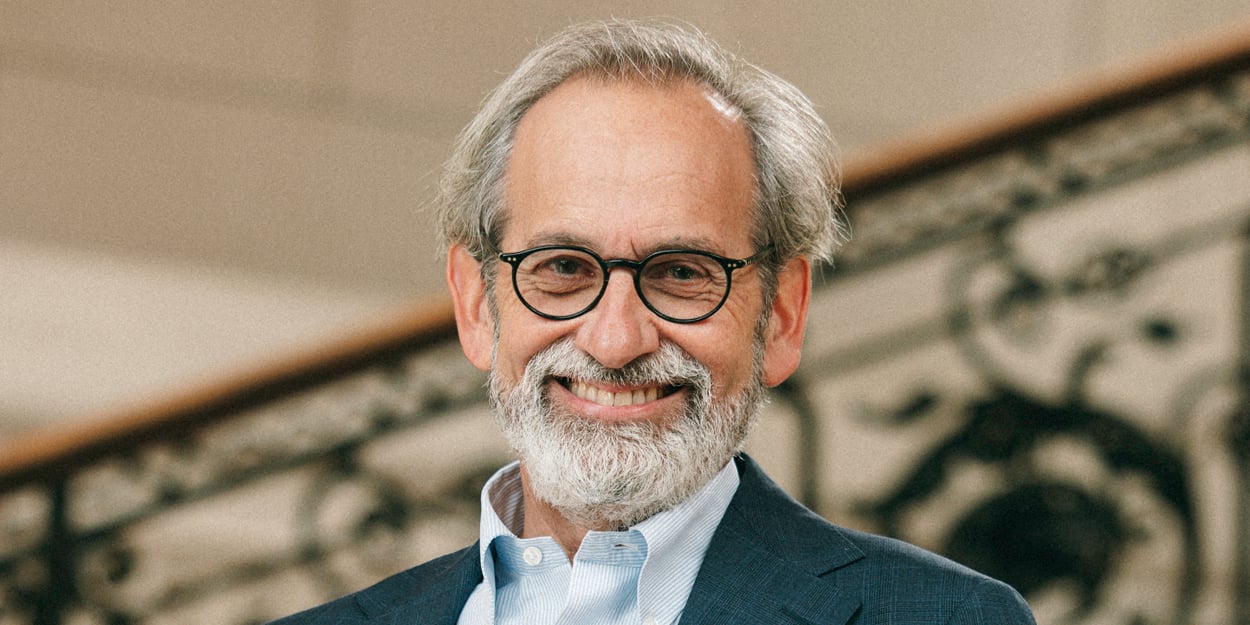
Appointed CEO of NS Partners last December - a first in the group's history - Frédéric de Poix has taken the helm of one of Switzerland's leading asset management companies, against a backdrop of profound change in the sector. Between the challenges of growth, generational transition and regulatory pressure, he explains the Group's priorities.
What are the priorities associated with your new mandate?
When you become CEO of a company like ours, there are two natural priorities. The first is to organise growth and the second is to improve efficiency. Beyond these two dimensions, a third challenge is essential. We need to ensure perfect consistency between our three business lines - wealth management, asset management and fund structuring - in order to align our objectives and make our business model clearer.
Organising growth in our business primarily involves expanding the assets under management. This can be achieved through acquisitions or mergers, but also and above all through organic growth, by recruiting new relationship managers. The two approaches are complementary, but they both take time. Today, this type of development is built over several years.
And this growth is based above all on our ability to deliver performance, in particular through our expertise in alternative investment management and fund selection. This is a key element, because it is this performance that feeds the long-term confidence of our customers.
The second area is efficiency. This means ensuring that our model works properly, with the right systems and the right people to run them. A well-sized organisation is essential to guarantee the company's long-term future and independence.
Above and beyond these two dimensions, there is a fundamental element to consider. That is talent. Our business depends entirely on them. We need to be able to identify and attract them, but also to coach and develop them. This is as true for managers as it is for customer-facing profiles.
Since we moved into our new offices on the rue du Mont-Blanc, we've been experiencing a very positive dynamic. There's a new energy, the teams are enjoying themselves, and you can feel it every day. It's also the role of the CEO to nurture this enthusiasm and create an environment in which talented people can express themselves to the full.
NS Partners has decided to strengthen both its executive committee and its shareholder base, with the arrival of new partners. How does this new governance structure change the Group's entrepreneurial dynamic?
First and foremost, this change addresses the issue of succession. Like many independent companies, we have a generation of long-standing partners who are approaching a phase of transition.
We have chosen to remain independent, which means preparing for the future internally. This means bringing in new, younger partners, who will gradually take over. This transition is taking place over a long period, with close support for the current generation.
At the same time, we have rethought our governance. The Executive Committee has been renewed, with the aim of clarifying responsibilities. My role is now cross-functional. I no longer represent a specific business, but the whole Group, with trade-offs to be made between different business lines. This new framework also helps to speed up decision-making in a more demanding environment.
The arrival of new partners also brings a very positive dynamic. They question our practices, challenge our systems and propose changes. This pushes us to review certain areas in depth, whether in terms of tools, processes or even remuneration schemes, always with a particular focus on aligning interests with our clients, which remains at the heart of our model.
The independent asset manager model is changing as a result of increasing regulatory, technological and organisational demands. How do you see the role of management within EAM structures evolving in this new context?
It has become much more demanding than before. We are faced with an ongoing increase in regulatory constraints, more stringent compliance requirements and more frequent internal and external controls. Added to this are technological developments, which are forcing us to rethink certain processes, particularly repetitive tasks.
In this context, management must constantly strike a balance between systems and people. It is no longer simply a question of managing an activity, but of steering an organisation that is constantly evolving.
What has changed is that it is impossible to consider that a model has stabilised. Everything has to be regularly called into question, whether it's tools, teams or processes. Continuous improvement has become an obligation.
What's more, we're witnessing a wider transformation of the sector, with a gradual shift from an artisanal model to a more institutionalised one, which should be accompanied by a degree of consolidation.
NS Partners has three core businesses: wealth management, asset management and Luxembourg manco. What is the strategic rationale behind this organisation?
Our model is based on integration. Wealth management enables us to attract and support our customers. Asset management forms the core of our expertise, with recognised know-how in alternative management and fund selection. Finally, the management company in Luxembourg structures and administers the funds. When these three activities work together, they enable us to control the entire investment value chain, from customer relations to product structuring, within a coherent and transparent framework for our customers.
That said, their dynamics are different. The management company is growing fast, driven by high volumes but with lower margins. Conversely, the management business is growing more slowly, but with higher profitability. The challenge for NS Partners is therefore to ensure that these two dynamics coexist in a balanced way.
What are your main growth drivers today?
There are several complementary areas. The first remains the development of private clients, mainly in Switzerland, through the recruitment of new asset managers. The second is to strengthen our expertise in alternative management and fund selection, which is a key competitive advantage and an essential driver of performance. We are also exploring certain segments, such as the private markets, notably through evergreen structures, but here we are taking a more measured approach. These are different worlds, with different players and different dynamics. Finally, we are continuing to develop our fund structuring platform, particularly in Luxembourg.
Are independent asset managers, who are becoming better structured, capable of offering an alternative to traditional private banks?
They can be, provided they accept that they are different. Banks have increasingly industrialised models, which is logical given their size. On the other hand, we can offer a made-to-measure service, tailored to the specific needs of each customer, based on an open architecture that allows us to freely select the best solutions on the market.
This ability to customise is a key differentiator. But it also implies significant constraints. To offer this level of service in a strict regulatory environment, you need solid systems and robust control teams. The independent model is therefore more flexible, but also more demanding.
In view of the size of EAM structures such as NS Partners, should we expect a tightening of regulations?
It's already happening and has never really stopped. Requirements are constantly increasing, whether from regulators, banks or auditors. The result is increased complexity and growing pressure on costs. For the best structured players, these developments also represent an opportunity for differentiation. At NS Partners, we have been anticipating these developments for several years.
What's more, a new dimension has come to the fore: that of time. We now have to anticipate how certain decisions might be perceived in several years' time, which requires us to be even more vigilant in each of our operations.
In a more uncertain and fragmented market environment, how does an independent asset manager like NS Partners adapt the construction and management of its portfolios today?
We have structured our approach around a relatively stable balance: around one third internal funds, one third external funds and one third direct positions. This architecture has several advantages. Firstly, it forces us to remain competitive with the best players in the market. If an external solution is more relevant, we integrate it without hesitation.
Secondly, it allows us to benefit from an exceptional flow of information. Our teams meet between 600 and 800 managers every year, which reflects the breadth of our network and is a key element of our expertise. Finally, it offers great flexibility in portfolio construction. We can adapt allocations to suit client preferences, while maintaining rigorous investment discipline. In a more uncertain and fragmented environment, this ability to adapt is a decisive asset.